

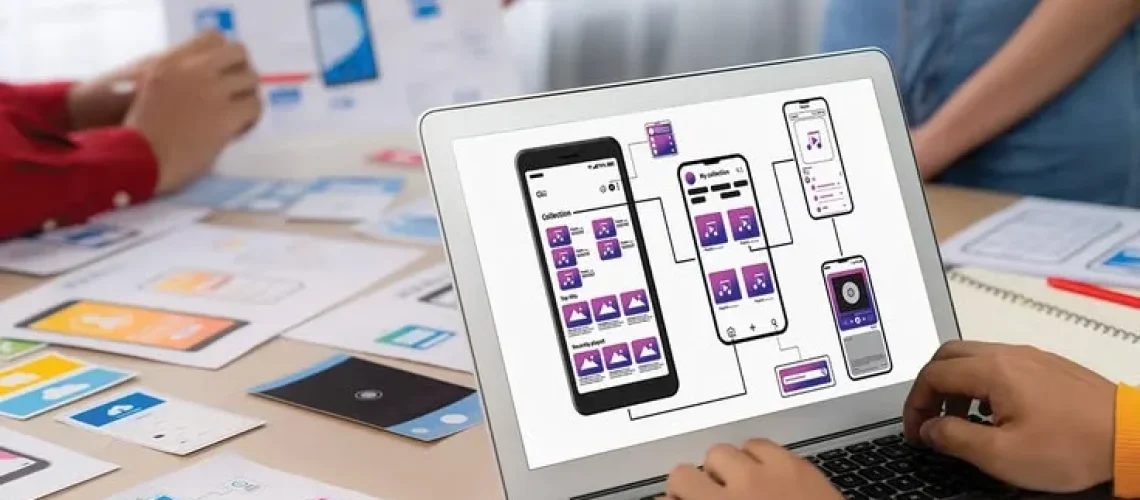
In today’s digital world, businesses need more than just a professional website or a feature-rich mobile application—they need both to work together. Customers expect a seamless experience whether they visit your website on a desktop or use your mobile app on their smartphone. This is why understanding Why Web Design and Mobile App Development Should Work Together is essential for businesses aiming to improve customer engagement, increase conversions, and build a stronger online presence.
When web design and mobile app development are planned as part of the same digital strategy, businesses create a consistent user experience that strengthens their brand and improves customer satisfaction.
The Importance of an Integrated Digital Experience
Modern customers switch between multiple devices throughout the day. They may discover your business through a website, continue browsing on a mobile device, and later complete a purchase through an app.
If these platforms feel disconnected, users become frustrated and may leave your business for a competitor. Integrating web design and mobile app development ensures users enjoy a smooth experience regardless of where they interact with your brand.
A unified approach also helps businesses maintain consistent branding, messaging, and functionality across every digital platform.
Consistent Branding Across Platforms
Your website and mobile app should reflect the same brand identity. This includes:
- Logo placement
- Brand colors
- Typography
- Navigation style
- Visual elements
- Tone of content
Consistency builds trust and makes your business instantly recognizable. When users experience the same design language across platforms, they feel more confident engaging with your brand.
Better User Experience
User experience (UX) is one of the most important factors in digital success.
When web designers and app developers collaborate from the beginning, they can create:
- Similar navigation patterns
- Consistent layouts
- Familiar user interfaces
- Easy transitions between website and app
- Faster task completion
This reduces the learning curve for users and increases customer satisfaction.
Improved Customer Journey
Customers rarely complete their journey using a single device.
For example:
- A customer discovers your business through Google Search.
- Visits your website.
- Downloads your mobile app.
- Creates an account.
- Makes purchases through the app.
- Returns to the website for additional information.
If each platform shares user accounts, preferences, and design consistency, the entire journey becomes effortless.
Better Performance and Speed
Although websites and mobile apps use different technologies, they should complement each other.
A well-designed website introduces users to your business, while the mobile app offers faster access to personalized services.
Together they provide:
- Quick loading pages
- Faster customer interactions
- Better accessibility
- Higher engagement
- Improved customer retention
Enhanced SEO and App Visibility
Your website plays a major role in helping customers discover your business through search engines.
An SEO-optimized website can encourage visitors to download your mobile application by promoting its features and benefits.
Similarly, the mobile app can direct users back to valuable website content, creating a connected digital ecosystem.
Benefits include:
- Increased organic traffic
- More app downloads
- Better online visibility
- Higher customer engagement
Easier Content Management
Businesses frequently update products, services, promotions, and company information.
When web and mobile development are integrated, content management becomes more efficient.
Updates can remain consistent across platforms, reducing errors and ensuring customers always receive accurate information.
This also saves time for marketing and development teams.
Increased Customer Engagement
Mobile apps offer features that websites alone cannot fully deliver, including:
- Push notifications
- Personalized recommendations
- Offline functionality
- Loyalty rewards
- Device integrations
Meanwhile, websites provide:
- Detailed information
- Blog content
- Search engine visibility
- Contact pages
- Educational resources
Together, they create multiple opportunities for engaging customers at every stage of the buying journey.
Stronger Business Growth
Businesses that combine professional web design with mobile app development often experience:
- Higher conversion rates
- Better customer retention
- Increased brand awareness
- Improved customer loyalty
- Greater revenue opportunities
Instead of treating websites and mobile apps as separate projects, businesses should consider them complementary components of a single digital strategy.
Simplified Maintenance
When both platforms follow similar design systems and development standards, maintaining them becomes easier.
Development teams can:
- Reuse design components
- Share API integrations
- Maintain consistent updates
- Fix issues more efficiently
- Reduce long-term development costs
This results in faster improvements and a more reliable digital experience.
Better Analytics and Decision Making
An integrated digital strategy allows businesses to collect valuable insights from both websites and mobile applications.
Analytics help businesses understand:
- Customer behavior
- Popular features
- User preferences
- Purchase patterns
- Conversion paths
These insights help improve future marketing campaigns, website performance, and app functionality.
Future-Proof Digital Strategy
Technology continues to evolve rapidly. Businesses that plan web design and mobile app development together can adapt more easily to new technologies such as:
- Artificial Intelligence (AI)
- Voice search
- Progressive Web Apps (PWAs)
- Augmented Reality (AR)
- Chatbots
- Cross-platform experiences
Building both platforms with scalability in mind prepares businesses for future digital opportunities.
Best Practices for Combining Web Design and Mobile App Development
To achieve the best results:
- Plan both platforms together from the beginning.
- Use consistent branding and UI design.
- Focus on responsive web design.
- Prioritize user experience.
- Share data securely between platforms.
- Optimize website performance for SEO.
- Test user journeys across multiple devices.
- Continuously gather user feedback and improve both platforms.
Understanding Why Web Design and Mobile App Development Should Work Together is essential for businesses that want to deliver exceptional customer experiences. A professionally designed website helps customers discover your business through search engines, while a well-developed mobile app provides convenience, personalization, and long-term engagement.
By integrating both platforms into a single digital strategy, businesses can strengthen their brand, improve customer satisfaction, increase conversions, and remain competitive in an increasingly mobile-first world. Investing in web design and mobile app development together is not just a smart technical decision—it is a powerful strategy for sustainable business growth.