

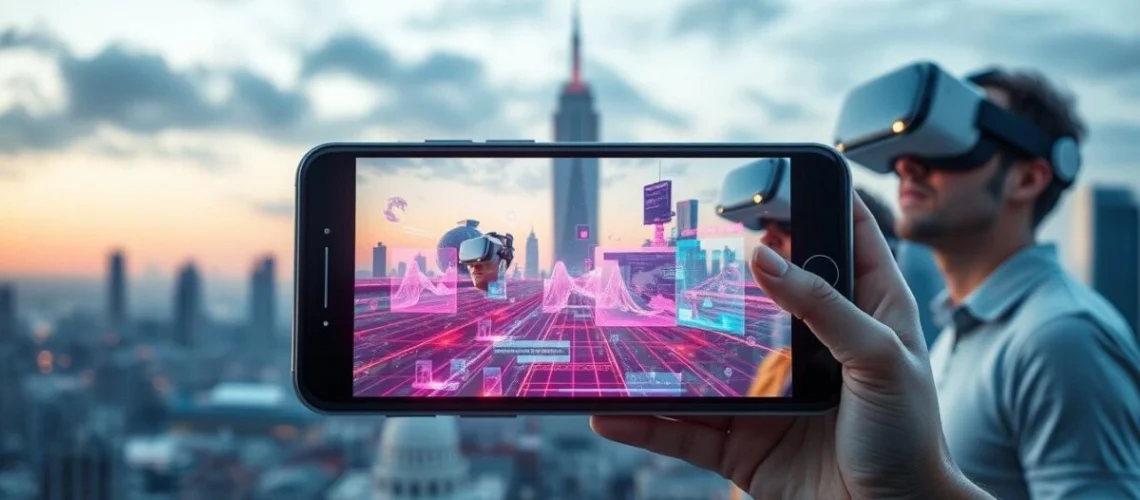
As digital experiences evolve, users now expect more than basic functionality from mobile applications. Augmented Reality (AR) and Virtual Reality (VR) are redefining how people interact with apps by delivering immersive, interactive, and engaging experiences. No longer limited to gaming, these technologies are now widely used in industries such as e-commerce, healthcare, education, real estate, and retail.
By integrating AR and VR into mobile app development, businesses can create powerful digital experiences that increase engagement, improve decision-making, and strengthen brand loyalty. When supported by reliable web development, these immersive features become scalable, seamless, and future-ready.
What Are AR and VR in Mobile Applications?
Augmented Reality (AR) enhances the real world by adding digital elements like images, animations, or information through a mobile device’s camera. Virtual Reality (VR) creates a fully immersive digital environment, allowing users to explore virtual spaces using mobile-based VR or headsets.
In modern mobile app development, AR and VR transform how users interact with content. From virtual product try-ons to interactive simulations, these technologies make mobile apps more engaging, informative, and memorable.
Increased User Engagement and Interaction
One of the strongest advantages of AR and VR is their ability to boost user engagement. Unlike traditional apps that rely on simple taps and swipes, immersive technologies encourage active participation.
For example, AR allows users to visualize products in real time—such as placing furniture in a room or trying accessories virtually. VR enables users to explore virtual showrooms, tours, or training environments. These experiences increase time spent in the app and significantly enhance user satisfaction.
Better User Experience and Personalization
User experience is a key factor in app success. AR and VR improve this experience by offering realism and personalization. Users can interact with content based on their preferences, environment, or behavior.
From a mobile app development perspective, immersive previews help reduce uncertainty during purchasing decisions. When integrated with web development systems like user databases and analytics, apps can deliver personalized AR and VR experiences that build trust and improve conversion rates.
Standing Out With Innovation
In competitive digital markets, innovation is essential. AR and VR integration helps businesses differentiate their apps and present themselves as forward-thinking brands.
By combining advanced mobile app development with strong web development infrastructure, businesses can implement immersive features without compromising performance. This approach attracts modern users and strengthens brand credibility.
Enhanced Visualization and Smarter Decisions
AR and VR allow users to explore products and services in detail before making decisions. This is especially valuable in industries that rely on visualization.
Real estate apps can offer virtual property tours, healthcare apps can visually explain procedures, and education apps can simulate real-world learning experiences. With reliable web development, content and data remain synchronized, ensuring smooth and consistent performance.
Higher Retention and Long-Term Loyalty
Apps that deliver immersive experiences tend to retain users longer. AR and VR create excitement and encourage repeat engagement, leading to stronger customer loyalty.
Mobile app development teams can track user behavior through analytics, while web development systems support dashboards and insights. This data-driven approach allows businesses to continuously improve the user experience.
Seamless Integration With Web Platforms
AR and VR work best when integrated with web platforms. Web development plays a critical role in managing content, APIs, cloud storage, and real-time updates.
For example, AR product data can be controlled through a web-based CMS, while user profiles and analytics remain synchronized across mobile and web platforms—ensuring consistency and scalability.
Preparing for the Future of Mobile Apps
AR and VR technologies are becoming more accessible as devices and platforms evolve. Businesses that adopt these technologies early gain a competitive edge and stay ahead of digital trends.
With flexible mobile app development and scalable web development frameworks, immersive features can be updated or expanded without rebuilding the entire app—making applications future-proof and cost-effective.
New Revenue and Growth Opportunities
AR and VR also open new monetization opportunities. Businesses can offer premium immersive features, virtual experiences, and interactive advertising.
Supported by secure mobile app development and web development systems, businesses can manage subscriptions, payments, and content delivery efficiently—driving both user engagement and revenue growth.
Conclusion
AR and VR integration is transforming mobile apps into immersive digital experiences that go beyond traditional interaction. These technologies enhance engagement, personalization, visualization, and retention, leading to higher user satisfaction.
When powered by expert mobile app development and reliable web development, AR and VR deliver scalable, innovative, and future-ready solutions. For businesses looking to stay competitive in today’s digital landscape, integrating AR and VR into mobile applications is no longer optional—it is a strategic necessity.