

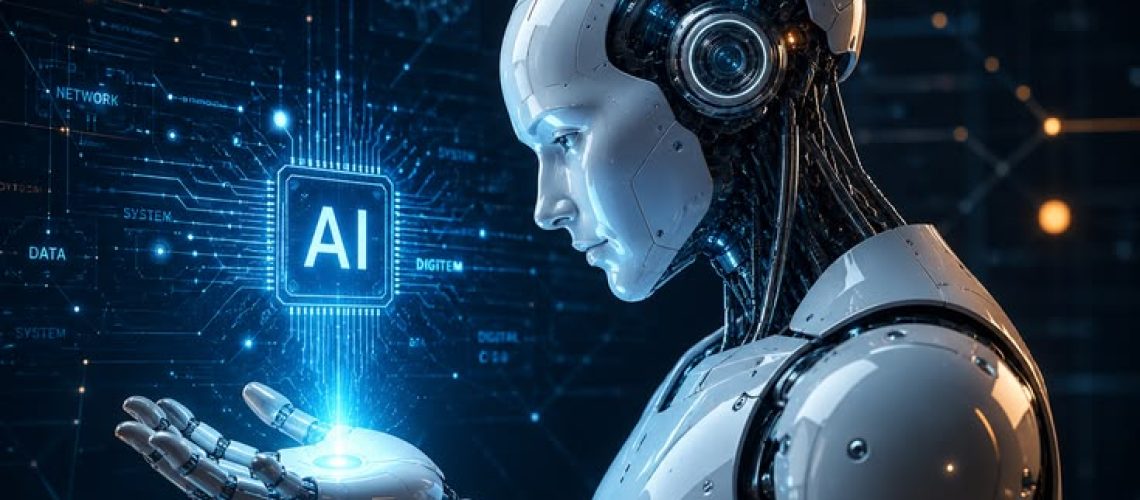
Artificial Intelligence has become an important technology in the development of modern mobile applications. From personalized recommendations and intelligent chatbots to automated testing and predictive analytics, AI is changing how applications are designed, developed, and experienced. Businesses are increasingly adopting AI-powered features to make mobile apps more useful, efficient, and responsive to customer needs.
Understanding the Role of AI in Mobile App Development can help businesses identify new opportunities to improve user engagement, automate processes, and create smarter digital experiences.
AI Improves the Mobile App Development Process
Traditional mobile app development involves several stages, including planning, coding, testing, debugging, and maintenance. AI can support developers throughout these stages by automating repetitive activities and providing intelligent assistance.
AI-powered development tools can help generate code suggestions, identify potential errors, analyze application performance, and assist with debugging. This can reduce development effort and allow developers to spend more time working on functionality, design, and business requirements.
Creates Personalized User Experiences
Personalization is one of the most valuable applications of AI in mobile apps. AI systems can analyze user interactions, preferences, browsing patterns, and previous activities to provide more relevant experiences.
For example, an entertainment application can recommend content based on viewing history, while an e-commerce app can suggest products based on previous searches and purchases.
Personalized experiences can make applications more relevant to individual users and encourage them to interact with the app more frequently.
Enables Intelligent Chatbots
AI-powered chatbots allow mobile applications to provide automated customer support. Users can ask questions, search for information, receive guidance, or resolve common issues through conversational interfaces.
Unlike basic rule-based systems, modern AI chatbots can understand natural language and respond to a wider range of user requests. Businesses can use these systems to provide assistance at any time while reducing the workload on customer support teams.
Improves Voice-Based Interactions
Voice technology has become increasingly common in mobile applications. AI enables apps to understand spoken commands and convert speech into useful actions.
Voice-enabled features can allow users to search for information, send messages, control application functions, or perform other tasks without relying entirely on touch interactions.
This can make applications more convenient and accessible, particularly when users need hands-free interaction.
Strengthens Predictive Analytics
AI can analyze large amounts of application data and identify patterns that may not be immediately visible to humans. Predictive analytics can help businesses anticipate customer behavior, identify trends, and make better decisions.
For example, an online shopping application can predict products that users may be interested in, while a financial application can analyze spending patterns and provide useful insights.
These capabilities can help businesses deliver more relevant services and improve customer engagement.
Enhances Mobile App Security
Security is a major concern for mobile applications, particularly when they handle personal, financial, or business information. AI can assist with detecting unusual behavior and identifying potential security threats.
Machine learning systems can analyze login patterns, transactions, device activity, and other signals to identify suspicious behavior. Businesses can use these capabilities as part of a broader security strategy to help detect potential threats more quickly.
AI should complement, rather than replace, established security practices such as encryption, authentication, secure coding, and regular security testing.
Supports Automated Testing
Testing is an essential part of mobile app development. Developers need to identify bugs and performance issues before an application reaches users.
AI can assist with automated testing by analyzing application behavior, identifying unusual results, and prioritizing potential problem areas. Automated testing can reduce repetitive manual work and help development teams identify issues earlier in the development cycle.
This can contribute to more reliable applications and faster development workflows.
Improves App Performance
AI can help developers understand how users interact with mobile applications and where performance problems occur. Data analysis can identify slow processes, frequently used features, application crashes, and other performance concerns.
Development teams can use these insights to optimize application functionality and improve the overall user experience.
Enables Smart Recommendations
Recommendation systems are a common example of AI in mobile applications. These systems analyze information about users and content to identify potentially relevant products, services, articles, videos, music, or other resources.
A well-designed recommendation system can help users discover useful content without manually searching through large amounts of information.
For businesses, this can increase engagement and create additional opportunities for conversions.
Automates Routine Tasks
AI can automate several tasks that would otherwise require manual interaction. Depending on the purpose of the application, AI can assist with document processing, image recognition, data categorization, customer support, content organization, and notifications.
Automation can improve efficiency and allow users to complete tasks more quickly. For businesses, it can also reduce operational workloads and improve productivity.
Supports Image and Object Recognition
AI-powered computer vision allows mobile applications to analyze images and recognize objects, faces, text, or other visual information.
This technology can be used in areas such as healthcare applications, retail, security, education, travel, and social media. For example, an app may allow users to scan an image and extract text or identify specific objects.
The Future of AI in Mobile Apps
AI capabilities are expected to become increasingly integrated into mobile applications. Advances in generative AI, natural language processing, computer vision, and machine learning can create new opportunities for interactive and intelligent applications.
Future mobile apps may provide more adaptive interfaces, real-time assistance, predictive services, and personalized functionality. However, businesses will also need to consider data privacy, transparency, security, and responsible AI use when implementing these technologies.
The Role of AI in Mobile App Development extends from the development process itself to the final user experience. AI can support coding, testing, personalization, customer service, security, analytics, automation, and application performance.
For businesses, incorporating AI into mobile applications can create opportunities to deliver smarter and more convenient digital experiences. With careful planning and responsible implementation, AI can become a valuable component of modern mobile app development and help applications remain competitive in an increasingly digital market.