

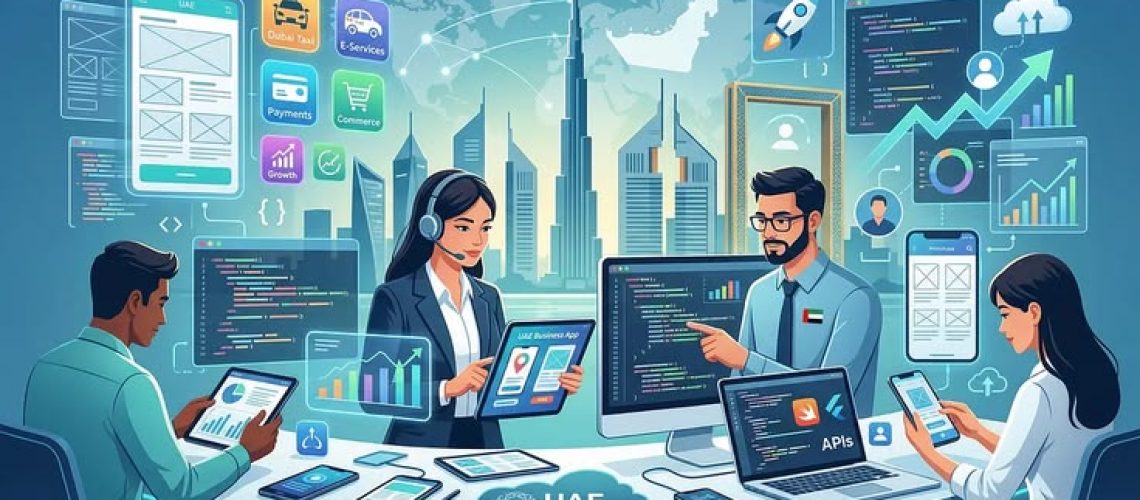
Mobile applications have become an essential part of modern business strategies. As customers increasingly rely on smartphones for shopping, communication, banking, healthcare, and entertainment, businesses must continuously adapt to changing technologies and user expectations. Understanding Mobile App Development Trends for Businesses helps organizations build innovative, secure, and user-friendly applications that improve customer experiences and support long-term growth.
New technologies such as artificial intelligence, cloud computing, the Internet of Things (IoT), and 5G connectivity are reshaping the mobile app landscape. Businesses that embrace these trends can gain a competitive advantage by offering faster, smarter, and more personalized digital experiences.
Artificial Intelligence Integration
Artificial Intelligence (AI) continues to transform mobile applications across various industries. AI-powered features enhance user experiences by providing intelligent recommendations, predictive analytics, and automated support.
Common AI applications include:
- Personalized product recommendations
- Smart search functionality
- Chatbots for customer support
- Voice recognition
- Predictive user behavior analysis
These capabilities help businesses improve customer satisfaction while reducing operational workload.
Cross-Platform App Development
Cross-platform development remains one of the most popular trends for businesses. Instead of creating separate applications for Android and iOS, developers use modern frameworks to build a single application that works efficiently across multiple platforms.
Benefits include:
- Faster development
- Lower development costs
- Easier maintenance
- Consistent user experience
- Faster deployment of updates
This approach enables businesses to reach broader audiences while optimizing resources.
5G Technology Enhances Mobile Experiences
The expansion of 5G networks allows mobile applications to deliver significantly faster speeds and lower latency. Businesses can now create more advanced applications with improved performance.
Advantages include:
- Faster downloads
- High-quality video streaming
- Real-time communication
- Improved cloud connectivity
- Better gaming experiences
- Enhanced augmented reality features
5G opens new opportunities for businesses to offer richer digital services.
Cloud-Based Mobile Applications
Cloud technology is becoming a standard component of modern mobile app development. Cloud-based apps reduce device storage requirements while improving accessibility and scalability.
Businesses benefit through:
- Secure data storage
- Automatic synchronization
- Faster updates
- Better collaboration
- Reduced infrastructure costs
Cloud integration also enables users to access their information from multiple devices without interruption.
Internet of Things (IoT) Integration
IoT connectivity continues to expand across industries, making mobile apps central to controlling connected devices.
Examples include:
- Smart home management
- Healthcare monitoring
- Industrial automation
- Fleet management
- Smart retail solutions
- Wearable device integration
Businesses adopting IoT-enabled applications can improve operational efficiency while delivering innovative customer experiences.
Enhanced Mobile App Security
Cybersecurity remains a top priority as businesses collect increasing amounts of customer data. Modern mobile applications incorporate advanced security measures to protect sensitive information.
Key security practices include:
- Multi-factor authentication
- Biometric login
- End-to-end encryption
- Secure cloud storage
- Regular security updates
- Data privacy compliance
Strong security builds customer trust and helps businesses meet regulatory requirements.
Personalized User Experiences
Customers expect applications to deliver experiences tailored to their preferences and behaviors. Personalization has become an important trend for increasing engagement and retention.
Modern apps personalize:
- Product recommendations
- Notifications
- Content
- Offers
- User dashboards
- Search results
Personalized experiences encourage users to interact more frequently with applications and increase customer loyalty.
Augmented Reality and Virtual Reality
Augmented Reality (AR) and Virtual Reality (VR) technologies continue gaining popularity in mobile app development.
Business applications include:
- Virtual product demonstrations
- Interactive shopping experiences
- Real estate property visualization
- Educational simulations
- Employee training
- Interior design previews
These immersive technologies help businesses create engaging customer interactions while reducing uncertainty before purchases.
Voice Technology Integration
Voice-enabled functionality has become increasingly common in business applications. Customers appreciate hands-free interaction and faster navigation.
Popular voice features include:
- Voice search
- Voice commands
- Smart assistants
- Voice-enabled customer support
- Accessibility improvements
Voice technology improves convenience while making applications more inclusive for different users.
Super Apps Continue Growing
Many businesses are moving toward developing “super apps” that combine multiple services within a single platform.
Examples of integrated features include:
- Payments
- Messaging
- Shopping
- Bookings
- Customer support
- Loyalty programs
Offering multiple services in one application increases user engagement and reduces the need for customers to switch between different apps.
Progressive Web Apps (PWAs)
Progressive Web Apps continue to gain popularity by combining the accessibility of websites with the functionality of native mobile applications.
Advantages include:
- Fast loading speeds
- Offline functionality
- Lower development costs
- Cross-device compatibility
- Easy updates
- Reduced storage requirements
PWAs provide businesses with an efficient way to reach users across multiple platforms.
Data Analytics for Better Decision-Making
Mobile applications increasingly integrate advanced analytics to help businesses understand customer behavior.
Analytics can reveal:
- User engagement patterns
- Feature popularity
- Purchase behavior
- Customer retention
- App performance
- Marketing effectiveness
These insights enable businesses to make data-driven improvements that enhance user experiences and increase profitability.
Sustainable Mobile App Development
Sustainability is becoming an important consideration in software development. Developers are optimizing applications to reduce energy consumption, improve efficiency, and minimize unnecessary resource usage.
Efficient coding practices, lightweight applications, and optimized server usage contribute to better performance while supporting environmental sustainability.
Keeping pace with Mobile App Development Trends for Businesses enables organizations to build applications that meet evolving customer expectations and support future growth. Technologies such as artificial intelligence, 5G, cloud computing, IoT, personalized experiences, enhanced security, and cross-platform development are shaping the future of business applications.
Businesses that invest in modern mobile app development can improve customer engagement, streamline operations, strengthen brand loyalty, and remain competitive in an increasingly digital marketplace. By embracing these trends, organizations position themselves for long-term success while delivering valuable and innovative mobile experiences.