

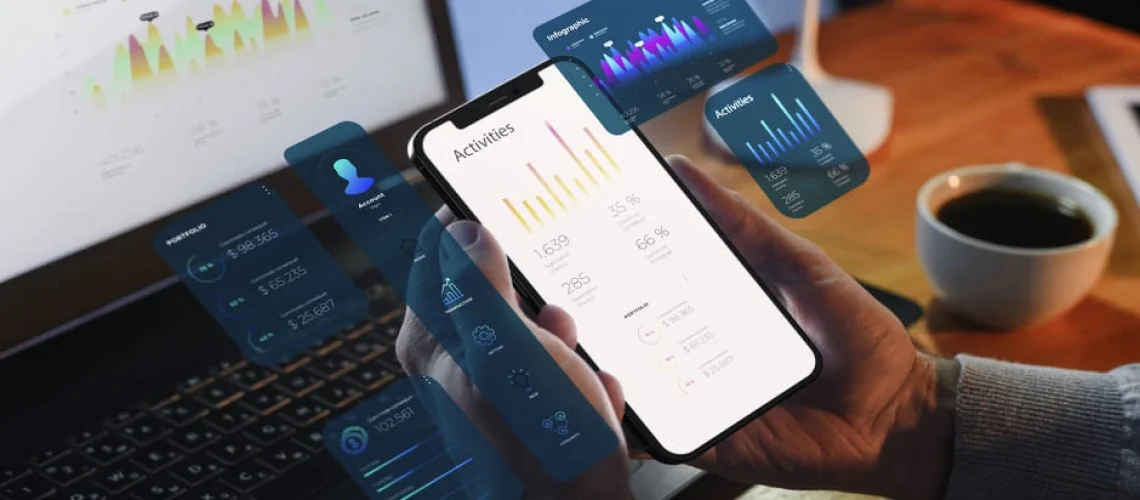
Mobile technology has become an essential part of modern business operations. Organizations across industries use mobile applications to improve communication, simplify workflows, strengthen customer relationships, and support business growth. As companies expand, they often require more advanced mobile solutions that can integrate with existing systems, protect sensitive information, and accommodate increasing numbers of users. Enterprise mobile applications address these requirements by providing tailored digital tools for employees, customers, partners, and management teams.
Enterprise Mobile Application Development Solutions help businesses transform traditional processes into efficient, connected, and scalable digital experiences. By combining modern technologies, secure architecture, and user-focused design, organizations can develop applications that support operational efficiency and long-term business objectives.
Understanding Enterprise Mobile Application Development
Enterprise mobile application development involves designing, building, deploying, and maintaining applications that support an organization’s internal operations or external services. Unlike basic consumer applications, enterprise solutions often need to connect with business databases, enterprise resource planning platforms, customer relationship management systems, and other essential software.
These applications can serve different purposes depending on organizational needs. Employees may use them to manage tasks, access company resources, communicate with colleagues, or submit reports. Customers may use enterprise applications to place orders, track deliveries, schedule appointments, or manage accounts.
The development process begins by identifying business challenges and understanding how employees and customers will use the application. This information guides decisions about features, technology platforms, integrations, security requirements, and deployment strategies.
A clearly defined development plan helps ensure that the final application addresses practical business needs rather than introducing unnecessary complexity.
Benefits of Enterprise Mobile Application Development Solutions
Businesses can gain several advantages by investing in well-designed enterprise mobile applications.
Improved operational efficiency: Mobile applications can automate repetitive tasks, reduce manual data entry, and provide employees with convenient access to essential information. Automated notifications and digital workflows can help teams complete activities more consistently.
Better communication: Enterprise applications can bring announcements, messages, task updates, and collaboration tools into a centralized environment. This is particularly useful for organizations with distributed teams or employees working across multiple locations.
Enhanced customer experiences: Customer-facing applications allow users to access services, review information, submit requests, and receive updates through their mobile devices. Convenient digital interactions can improve satisfaction and encourage continued engagement.
Access to real-time information: When connected to appropriate business systems, mobile applications can provide updated information about inventory, orders, appointments, performance metrics, and operational activities.
Scalable business processes: A flexible application architecture allows organizations to introduce additional features, support new departments, and accommodate changing requirements as the business grows.
Essential Features of Enterprise Mobile Applications
The features included in an enterprise application should reflect its intended purpose, user needs, and operational requirements. Several capabilities are commonly valuable across business environments.
User Authentication and Access Control
Enterprise applications frequently handle business information that should only be available to authorized users. Secure authentication, role-based permissions, and appropriate session management help protect company resources.
Depending on the application, organizations may also implement multifactor authentication and single sign-on to improve account security and simplify access management.
Workflow Automation
Workflow automation allows businesses to digitize processes such as approvals, employee requests, task assignments, and document submissions. Instead of relying on lengthy email exchanges or paper-based procedures, users can complete activities through structured digital workflows.
Notifications and Alerts
Push notifications can inform users about important events, pending approvals, task deadlines, order updates, or system changes. Notifications should be relevant and configurable to avoid overwhelming users with unnecessary messages.
Reporting and Analytics
Reporting tools help managers evaluate operational performance and identify opportunities for improvement. Depending on business requirements, applications may include dashboards, activity reports, performance indicators, and exportable business data.
Integration With Existing Systems
Enterprise mobile applications often need to communicate with existing business platforms. APIs and secure integration services can connect applications with CRM software, ERP systems, inventory platforms, payment services, and other organizational tools.
These integrations help reduce duplicated work and create a more consistent flow of information between departments.
Choosing the Right Mobile Development Approach
Selecting the appropriate development approach is an important decision because it affects cost, performance, maintenance, and long-term flexibility.
Native development uses platform-specific technologies to build applications for Android or iOS. This approach can provide strong access to device capabilities and may be suitable for applications requiring specialized performance or advanced hardware integration.
Cross-platform development allows businesses to build applications for multiple operating systems using a shared codebase. It can reduce duplicated development effort and support consistent functionality across platforms, depending on the application’s requirements.
Progressive web applications provide another option for certain business use cases. They offer app-like experiences through web technologies and may be suitable when broad accessibility and simpler deployment are priorities.
The best choice depends on the target audience, required functionality, security considerations, available resources, and expected application lifespan. A technical assessment can help organizations select an approach that balances immediate needs with future growth.
Security and Data Protection in Enterprise Applications
Security is a central consideration in enterprise mobile application development. Business applications may process customer details, financial records, employee information, confidential documents, and other sensitive data.
Developers should apply encryption where appropriate, secure API communication, strong authentication, access controls, and careful session management. Applications should also be tested for common vulnerabilities before deployment and throughout their lifecycle.
Organizations can strengthen protection through regular updates, dependency management, security monitoring, and incident response planning. Mobile device management may also help businesses apply security policies to company-owned devices and, where appropriate, approved employee devices.
Data collection and storage practices should follow applicable privacy laws and organizational policies. By integrating security into every development stage, businesses can reduce risk and improve confidence among employees, customers, and partners.
The Role of Cloud Technology and Emerging Innovations
Cloud infrastructure can support enterprise applications by providing flexible computing resources, centralized services, and integration capabilities. Depending on the architecture, cloud-based systems can simplify deployment, support remote access, and accommodate changing workloads.
Artificial intelligence can also enhance enterprise applications through features such as document processing, intelligent search, customer support assistance, predictive insights, and workflow recommendations. However, these capabilities should be introduced only when they address a defined business need and appropriate data protection measures are in place.
Other technologies, including Internet of Things integrations and location-based services, can support specialized applications in logistics, manufacturing, retail, and field service operations.
Businesses should evaluate emerging technologies carefully, considering implementation costs, reliability, security, and measurable benefits before adopting them.
Enterprise Mobile Application Maintenance and Continuous Improvement
Application development does not end when the product is launched. Ongoing maintenance is necessary to keep the application secure, compatible, reliable, and useful as business requirements evolve.
Regular updates can address operating system changes, resolve technical issues, improve performance, and introduce new features. Monitoring tools can help development teams identify errors, slow response times, and other problems before they significantly affect users.
Organizations should also gather feedback from employees and customers to understand which features work well and where improvements are needed. Performance indicators such as adoption rates, task completion times, error rates, and user satisfaction can help measure the application’s effectiveness.
A structured maintenance strategy protects the initial investment and allows the application to evolve alongside the organization.
Enterprise Mobile Application Development Solutions enable organizations to modernize business processes, improve employee productivity, strengthen customer engagement, and connect essential systems through convenient mobile experiences. Successful implementation requires careful planning, suitable technology selection, secure architecture, effective integrations, and ongoing performance management.
By focusing on real business challenges and user needs, companies can develop scalable mobile applications that support everyday operations and future expansion. A well-planned enterprise mobile solution can become a valuable digital asset, helping organizations operate more efficiently and respond confidently to changing market demands.