

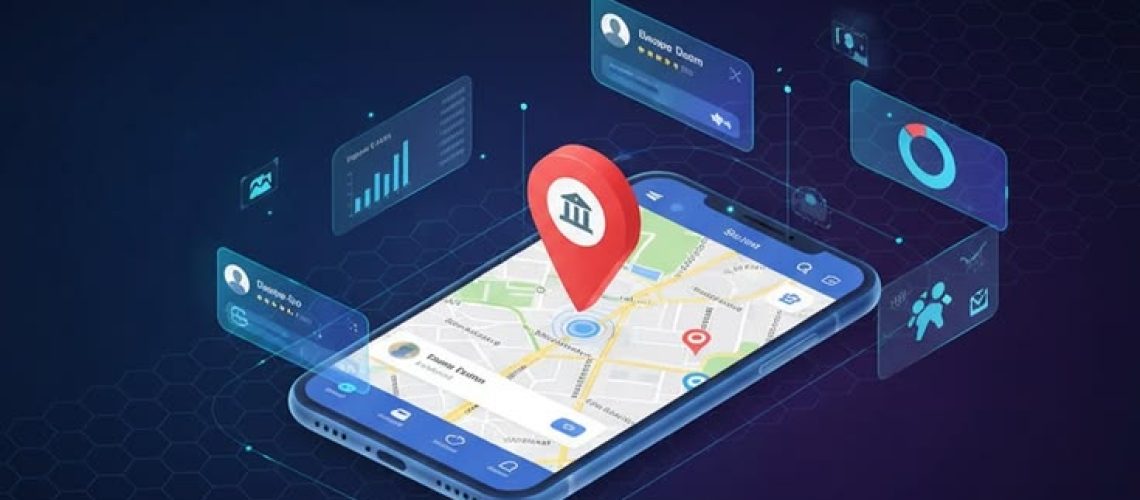
GPS integration has become an important feature in modern mobile application development. Location-based technology allows apps to understand where users are and provide services based on their real-time location. From navigation and food delivery to fitness, travel, healthcare, and transportation, GPS can make mobile applications more useful, responsive, and personalized.
How GPS Integration Enhances Mobile Apps is especially relevant for businesses looking to improve customer experiences and introduce location-based functionality. When implemented correctly, GPS can help applications provide accurate information, automate location-dependent services, and create more convenient interactions for users.
Providing Accurate Location Services
One of the primary advantages of GPS integration is the ability to determine a user’s location. Mobile apps can use location information to provide relevant services based on where the user is currently located.
Navigation applications, for example, can use GPS to identify a user’s position and provide directions. Similarly, delivery applications can use location information to help customers track orders and allow delivery teams to identify destinations more efficiently.
Accurate location functionality can make applications more practical and easier to use.
Improving Navigation
GPS plays a major role in navigation-based mobile applications. Users can receive directions, identify nearby destinations, and monitor their movement in real time.
Travel applications can use GPS to recommend nearby attractions, restaurants, hotels, and transportation options. Businesses can also integrate maps into their apps to help customers locate stores, branches, clinics, offices, or service areas.
This reduces the need for users to manually enter location details and creates a smoother digital experience.
Supporting Real-Time Tracking
Real-time tracking is another important benefit of GPS integration. Applications can use location information to display the movement of people, vehicles, deliveries, or other assets.
For example, ride-hailing apps can show the location of an approaching driver, while delivery platforms can allow customers to monitor the progress of their orders. Logistics businesses can also use GPS tracking to monitor vehicle routes and improve operational visibility.
Real-time tracking can increase transparency and help users feel more informed throughout a service.
Enhancing Personalized Experiences
GPS can help mobile applications provide content and services that are relevant to a user’s location. This can make the experience more personalized.
A retail application could highlight nearby stores or location-specific offers. A travel app could recommend attractions close to the user. A restaurant application could display nearby dining options based on the user’s current location.
Location-based personalization can help users discover relevant services without requiring extensive manual searches.
Improving Delivery and Logistics
Businesses involved in delivery and transportation can benefit significantly from GPS integration. Location data can help companies monitor vehicles, optimize routes, and provide customers with delivery updates.
Route optimization can potentially reduce unnecessary travel and improve delivery efficiency. Businesses can also use historical location data to analyze routes and identify opportunities for operational improvements.
For customers, accurate tracking information can provide greater visibility into estimated delivery times and order progress.
Supporting Fitness and Health Applications
GPS is widely used in fitness applications to track outdoor activities such as walking, running, and cycling. Apps can measure distance, routes, pace, and movement over time.
This information can help users monitor their activities and understand their progress. Fitness applications can also use location data to create route maps and provide activity summaries.
Healthcare applications may also use location-based functionality in specific use cases, such as coordinating home services or helping users find nearby healthcare facilities.
Enabling Location-Based Notifications
GPS integration can support notifications triggered by specific locations. When users enter or leave defined areas, an application can provide relevant information or reminders.
For example, a retail app could notify customers about a nearby store, while a travel app could provide information when a user reaches a particular attraction.
Businesses should use location-based notifications carefully. Too many irrelevant alerts can negatively affect the user experience, so notifications should provide genuine value.
Strengthening Local Business Services
Mobile applications for local businesses can use GPS to help customers find nearby branches, services, or delivery areas. Location functionality can make it easier for users to discover businesses based on proximity.
For example, a service application can display providers operating in the user’s area. A restaurant app can show nearby branches, while a healthcare platform can help users identify facilities close to their location.
This can improve convenience while helping businesses connect with nearby customers.
Supporting Better Business Insights
With appropriate consent and privacy controls, location data can provide businesses with useful insights into customer behavior and service demand.
Businesses can analyze general patterns such as frequently visited areas, service coverage, or popular locations. These insights can support decisions related to store placement, service availability, delivery operations, and marketing strategies.
Location analytics should always be handled responsibly, with appropriate privacy protections and transparent data practices.
Considering Battery and Privacy Requirements
Although GPS provides valuable functionality, developers need to implement it carefully. Continuous location tracking can consume battery power, so applications should request location updates only when necessary.
Privacy is equally important. Apps should clearly explain why location access is needed and request appropriate permissions. Developers should collect only the information required for the intended functionality and follow applicable privacy regulations.
A thoughtful approach to location permissions can help build user trust.
Creating More Useful Mobile Experiences
How GPS Integration Enhances Mobile Apps ultimately comes down to convenience, personalization, real-time functionality, and improved service delivery. GPS can help applications provide accurate navigation, real-time tracking, location-based recommendations, fitness tracking, delivery updates, and local services.
As mobile technology continues to evolve, location-based functionality can provide businesses with new ways to improve customer experiences and streamline operations. However, successful GPS integration requires more than simply adding a map or tracking feature. Developers should consider accuracy, battery efficiency, privacy, security, usability, and the specific needs of the target audience.
When these factors are addressed effectively, GPS integration can turn a standard mobile application into a more responsive and intelligent digital platform that delivers greater value to both users and businesses.