

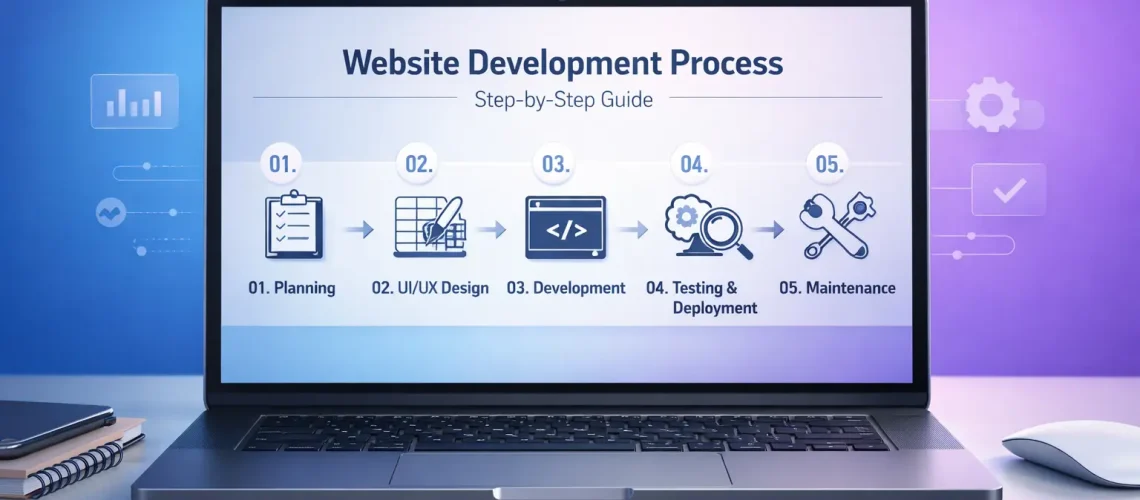
A website is one of the most valuable digital assets for any business. It serves as an online storefront, marketing platform, communication channel, and customer engagement tool. However, creating a successful website involves much more than attractive visuals. It requires careful planning, strategic design, technical development, thorough testing, and continuous maintenance.
Understanding The Complete Website Development Process Explained helps businesses appreciate each stage involved in building a high-performing, secure, and user-friendly website. Whether developing a business website, e-commerce platform, portfolio, or corporate portal, following a structured development process ensures better performance and long-term success.
Understanding Website Development
Website development is the process of designing, building, testing, launching, and maintaining a website. It combines creativity, technology, and strategy to create digital experiences that meet both business goals and user expectations.
The development process typically involves designers, developers, content creators, SEO specialists, and quality assurance professionals working together to deliver a complete solution.
Step 1: Project Planning
Every successful website begins with detailed planning.
During this stage, businesses identify their objectives, target audience, website features, and overall digital strategy. Clear planning reduces confusion later in the project and helps establish realistic timelines.
Planning usually includes:
- Business goals
- Target audience analysis
- Competitor research
- Website structure
- Required functionality
- Budget and timeline
A well-planned project creates a strong foundation for every stage that follows.
Step 2: Defining Website Requirements
Before design begins, developers gather detailed technical and functional requirements.
These may include:
- Contact forms
- Booking systems
- User accounts
- E-commerce functionality
- Payment gateways
- Blog management
- Content management system integration
Understanding these requirements early helps prevent costly changes during development.
Step 3: Creating the Website Structure
Information architecture plays an important role in website usability.
Developers and designers organize content into logical sections that make navigation easy for visitors.
Typical website pages include:
- Home
- About
- Services
- Products
- Blog
- Contact
- Privacy Policy
A clear structure improves user experience while supporting better search engine optimization.
Step 4: Wireframing and Design
Once the structure is finalized, designers create wireframes that outline page layouts before adding visual elements.
The design phase focuses on:
- Color schemes
- Typography
- Images
- Icons
- Navigation
- Button placement
- Responsive layouts
Good design balances aesthetics with functionality to create an engaging user experience.
Step 5: Content Creation
Content gives purpose to every website.
Professional content should clearly communicate products, services, and business information while remaining easy to read and optimized for search engines.
Content development includes:
- Website copy
- Headlines
- Product descriptions
- Blog articles
- Calls to action
- Images
- Videos
High-quality content improves credibility and encourages visitor engagement.
Step 6: Front-End Development
Front-end development transforms designs into interactive web pages.
Developers build the visible portion of the website using technologies such as HTML, CSS, and JavaScript.
Key responsibilities include:
- Responsive layouts
- Navigation menus
- Interactive elements
- Animations
- Mobile compatibility
- Accessibility improvements
Front-end development ensures users enjoy a smooth browsing experience across all devices.
Step 7: Back-End Development
The back end powers the functionality behind the website.
Developers create systems that manage databases, user accounts, content management, forms, authentication, and business logic.
Common back-end functions include:
- Database management
- User authentication
- Server configuration
- API integration
- Security implementation
- Content management
Strong back-end development ensures website reliability and performance.
Step 8: Search Engine Optimization
SEO should be integrated throughout the website development process rather than added after launch.
Important SEO considerations include:
- Clean website structure
- Mobile-friendly design
- Fast loading speeds
- Optimized images
- Meta titles
- Meta descriptions
- Internal linking
- Structured content
These elements help search engines understand website content and improve online visibility.
Step 9: Performance Optimization
Website performance directly impacts user satisfaction.
Developers optimize performance by:
- Compressing images
- Minimizing code
- Enabling browser caching
- Optimizing databases
- Reducing unnecessary scripts
A fast website encourages visitors to remain engaged while improving search engine rankings.
Step 10: Website Testing
Before launch, every feature should undergo comprehensive testing.
Testing includes:
- Functionality testing
- Browser compatibility
- Mobile responsiveness
- Form validation
- Security testing
- Performance testing
- User experience evaluation
Testing identifies issues before visitors encounter them.
Step 11: Security Implementation
Website security protects both businesses and users.
Essential security measures include:
- SSL certificates
- Secure authentication
- Data encryption
- Firewall protection
- Malware scanning
- Regular software updates
Strong security helps build customer trust while protecting sensitive information.
Step 12: Website Launch
After successful testing, the website is deployed to the live server.
Launch activities typically include:
- Domain configuration
- Hosting setup
- Final testing
- Search engine submission
- Performance monitoring
- Backup creation
Even after launch, developers continue monitoring the website to ensure everything functions correctly.
Step 13: Website Maintenance
Website development does not end after publication.
Regular maintenance ensures the website remains secure, fast, and up to date.
Maintenance tasks include:
- Software updates
- Security monitoring
- Content updates
- Performance optimization
- Bug fixes
- Backup management
- SEO improvements
Ongoing maintenance keeps the website performing at its best.
Importance of Responsive Design
Modern websites must function seamlessly across smartphones, tablets, laptops, and desktop computers.
Responsive design ensures:
- Better usability
- Improved accessibility
- Higher customer satisfaction
- Mobile compatibility
- Consistent branding
Responsive websites also support better search engine performance.
Choosing the Right Technology
The technologies used during development depend on business goals and website complexity.
Common considerations include:
- Content management systems
- Custom development frameworks
- E-commerce platforms
- Database solutions
- Cloud hosting
- Third-party integrations
Selecting the right technology improves scalability and simplifies future updates.
Common Challenges During Website Development
Some common development challenges include:
- Changing project requirements
- Performance optimization
- Cross-browser compatibility
- Mobile responsiveness
- Security risks
- Content organization
- Integration with external systems
A structured development process helps minimize these challenges.
The Future of Website Development
Website development continues to evolve with emerging technologies such as:
- Artificial intelligence
- Progressive Web Apps
- Voice search optimization
- Automation
- Advanced cybersecurity
- Personalized user experiences
- Cloud-based infrastructure
Businesses that embrace these innovations can deliver more engaging and efficient digital experiences.
The Complete Website Development Process Explained demonstrates that building a successful website requires careful planning, creative design, technical expertise, and ongoing maintenance. Every stage—from defining business goals and creating responsive designs to development, testing, optimization, launch, and continuous updates—plays a crucial role in delivering a website that meets user expectations and supports business growth. By following a structured development process, businesses can create secure, high-performing, and scalable websites that enhance customer engagement, improve search visibility, and provide lasting value in an increasingly competitive digital landscape.


