

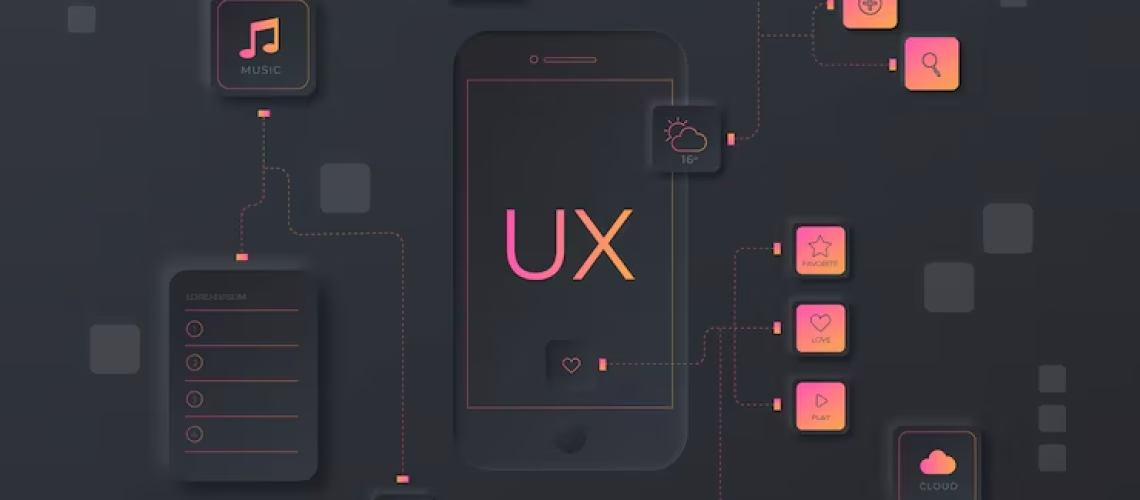
A well-designed website is not just about visuals—it’s about how easily users can find what they’re looking for. Understanding How to Improve Your Website Navigation is essential for creating a seamless and engaging user experience. Navigation acts as the roadmap of your website, guiding visitors through content, services, and actions. If users struggle to navigate, they are more likely to leave, increasing bounce rates and reducing conversions.
Effective navigation simplifies the user journey, improves accessibility, and ensures that visitors can move through your website effortlessly. Whether you run an e-commerce store, blog, or corporate website, optimizing navigation is a critical step toward success.
Why Website Navigation Matters
Website navigation plays a crucial role in user experience and overall site performance. When navigation is intuitive, users can quickly locate information without confusion. This leads to longer session durations, increased engagement, and higher chances of conversion.
Poor navigation, on the other hand, can frustrate users. If menus are cluttered or confusing, visitors may abandon the site altogether. Search engines also consider user behavior, so effective navigation can indirectly support better SEO performance.
Keep Navigation Simple and Clear
One of the most important principles in How to Improve Your Website Navigation is simplicity. Avoid overwhelming users with too many menu items. Limit your main navigation to essential pages such as Home, About, Services, Blog, and Contact.
Use clear and descriptive labels so users instantly understand where each link leads. Avoid jargon or overly creative names that may confuse visitors. Clarity always outperforms cleverness when it comes to navigation.
Use a Logical Structure
A well-organized structure helps users move through your website intuitively. Group related content under relevant categories and maintain a consistent hierarchy.
For example, if you have multiple services, organize them under a single “Services” menu with dropdown options. This keeps the main navigation clean while still providing access to detailed pages.
Consistency is key. Users should not have to relearn navigation as they move from one page to another.
Optimize for Mobile Devices
With the majority of users browsing on mobile devices, responsive navigation is essential. Mobile navigation should be easy to access and use, typically through a hamburger menu or collapsible design.
Ensure that buttons are large enough to tap easily and that menus load quickly. A smooth mobile navigation experience significantly improves user satisfaction and engagement.
Use Visual Hierarchy
Visual hierarchy helps guide users’ attention to the most important elements. Highlight key pages or actions using size, color, or placement.
Primary navigation items should stand out, while secondary links can be less prominent. This ensures users can quickly identify where to go next without feeling overwhelmed.
Proper spacing and alignment also contribute to a cleaner and more balanced layout.
Include a Search Function
For larger websites, a search bar is an essential navigation tool. It allows users to quickly find specific content without browsing through multiple pages.
Place the search bar in a visible location, typically at the top of the page. Ensure that search results are accurate and relevant to improve usability.
Add Breadcrumb Navigation
Breadcrumbs show users their current location within the website hierarchy. They provide an easy way to navigate back to previous pages without using the main menu.
This feature is especially useful for websites with deep structures, such as e-commerce platforms or content-heavy sites.
Breadcrumb navigation also enhances SEO by improving internal linking and site structure.
Maintain Consistency Across Pages
Consistency is a key factor in How to Improve Your Website Navigation. Your navigation menu should remain the same across all pages. This creates a familiar experience and helps users feel more comfortable exploring your site.
Avoid changing menu styles, positions, or labels between pages. Consistency builds trust and reduces confusion.
Improve Loading Speed
Navigation should be fast and responsive. Slow-loading menus or pages can frustrate users and lead to higher bounce rates.
Optimize images, reduce unnecessary scripts, and use efficient coding practices to ensure quick loading times. A fast website enhances both user experience and search engine rankings.
Use Call-to-Action Buttons Strategically
Call-to-action (CTA) buttons guide users toward important actions such as signing up, contacting, or making a purchase. Place CTAs strategically within your navigation or header area.
Ensure they are visually distinct and easy to find. However, avoid overloading the navigation with too many CTAs, as this can reduce their effectiveness.
Test and Improve Regularly
Improving website navigation is an ongoing process. Use analytics tools to understand how users interact with your site. Identify pages with high bounce rates or navigation drop-offs.
Conduct usability testing to gather feedback and identify areas for improvement. Continuous optimization ensures your navigation remains effective as your website grows.
Common Navigation Mistakes to Avoid
Even small mistakes can impact user experience. Some common issues include:
- Overcrowded menus with too many options
- Poor mobile navigation design
- Hidden or hard-to-find menus
- Broken links or outdated pages
Avoiding these mistakes is essential for maintaining a smooth and user-friendly navigation system.
Understanding How to Improve Your Website Navigation is vital for creating a successful website. Clear structure, simplicity, consistency, and responsiveness are the key elements that contribute to effective navigation.
By focusing on user needs and continuously optimizing your navigation, you can create a seamless browsing experience that keeps visitors engaged and encourages them to take action. In today’s competitive digital landscape, strong navigation is not just a feature—it is a necessity for long-term success.